The Solo Life An exhibition in eight rooms
How We Got the Place to Ourselves: A Brief, Surprisingly Eventful History of Living Alone
The apartment, the paycheck, the disappearing bed, and a few rather determined people who made having the place to yourself possible.
Gallery one
The timeline
Dates and periods from the story. Choose a station, then follow its link to the chapter.
-
Before the studio apartment
First came the room—and everybody else's rules
Before the studio apartment
Before the self-contained studio apartment became familiar, many urban workers found accommodation in boardinghouses, rooming houses, and other shared arrangements. A rented bedroom might be private; meals, entrances, bathrooms, and behavioral expectations often were not.
Go to chapter 1: First came the room—and everybody else's rules -
20th century
The machinery of a one-person household
20th century
As twentieth-century homes acquired more reliable plumbing, electrical service, refrigeration, laundry equipment, and ready-made goods, some domestic tasks became easier to perform without a large household labor force. A smaller kitchen could function as a kitchen.
Go to chapter 4: The machinery of a one-person household -
1911–1912
The bed that disappeared
1911–1912
William L. Murphy was among the inventors who tackled the problem with a disappearing bed. His United States patent No. 1,030,201, filed April 3, 1911, and issued June 18, 1912, described a mechanism for moving a full-width bed through a narrower opening and concealing it when it was not in use.
Go to chapter 3: The bed that disappeared -
1936
Then came the woman who intended to enjoy herself
1936
By the 1930s, the idea of the independent woman with her own home had become familiar enough for Marjorie Hillis to make an argument about how to enjoy it. Hillis, a Vogue editor, published Live Alone and Like It: A Guide for the Extra Woman in 1936.
Go to chapter 2: Then came the woman who intended to enjoy herself -
1974
The right to stay—and the means to pay
1974
The Equal Credit Opportunity Act of 1974, for example, prohibited creditors from discriminating against applicants on the basis of sex or marital status—a consequential reform for women seeking to establish and finance households independently.
Go to chapter 5: The right to stay—and the means to pay -
1975 / 2025
From exception to ordinary household
1975 / 2025
According to the U.S. Census Bureau, one-person households represented 20 percent of American households in 1975 and 29 percent in 2025—39.7 million households in that later year.
Go to chapter 6: From exception to ordinary household -
Contemporary solo culture
Ohitorisama
Contemporary solo culture
Other societies developed visible consumer practices around one-person activities. In Japan, the term ohitorisama came to describe the person enjoying services or leisure on their own, especially in discussions of women dining, staying in hotels, or traveling alone.
Go to chapter 6: Ohitorisama -
The present
The one-person premium
Living alone is easy to describe and surprisingly complicated to arrange. You need a door that locks, somewhere to put a bed, an income that covers the whole rent, and a reasonable answer to what happens when the sink leaks. There are days when the whole enterprise seems to depend on having a second pair of hands. Historically, it also depended on an elaborate collection of inventions and institutions.
For much of history, a household was a shared workplace. Food preparation, heating, laundry, childcare, and the care of sick or elderly relatives involved labor distributed across relatives, servants, and other household members. A private room—or an entire establishment occupied by one adult—was hardly the obvious default. Being on your own could be a religious vocation, a misfortune, a stage between other arrangements, or an expensive privilege.
That began to change when cities, paid employment, new kinds of housing, and household technology changed what an ordinary adult could manage independently.
Room 1 Before the studio apartment
1. First came the room—and everybody else's rules
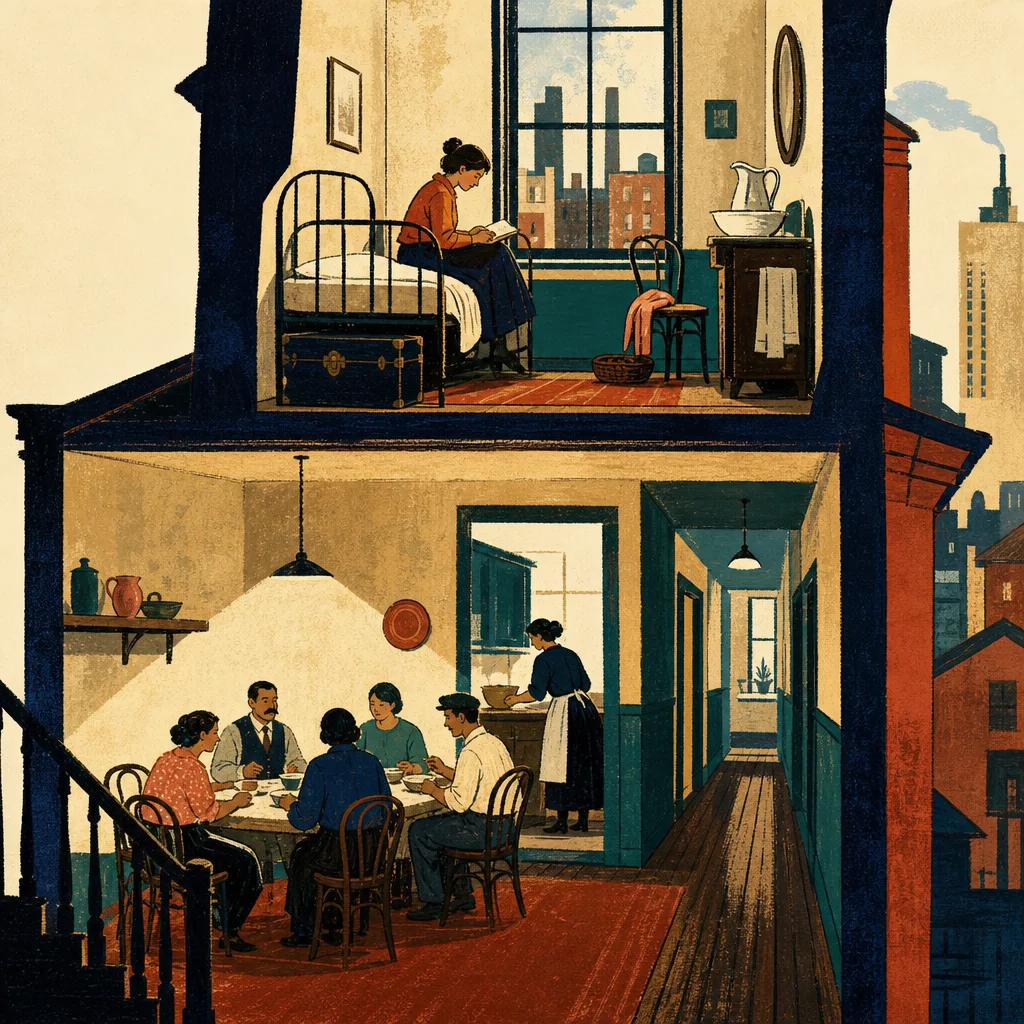
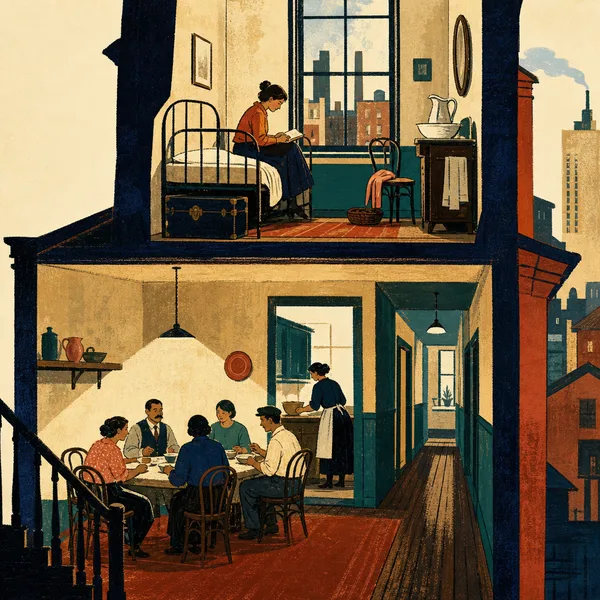
Before the self-contained studio apartment became familiar, many urban workers found accommodation in boardinghouses, rooming houses, and other shared arrangements. A rented bedroom might be private; meals, entrances, bathrooms, and behavioral expectations often were not. A landlady could provide dinner, a measure of security, and an impressive amount of unsolicited supervision.
For women earning wages in growing cities, independent housing carried an additional social negotiation. Organizations such as the Young Women's Christian Association offered residences and employment support, partly to make urban working life more practical and socially acceptable. The YWCA of New York traces its beginnings to 1858 and records a residential training center at 610 Lexington Avenue in the early twentieth century.
The city offered a paycheck and an alternative to remaining in a family household. It did not yet reliably offer a place where a person could shut the door, make dinner, and answer to no one.
Room 2 1936
2. Then came the woman who intended to enjoy herself
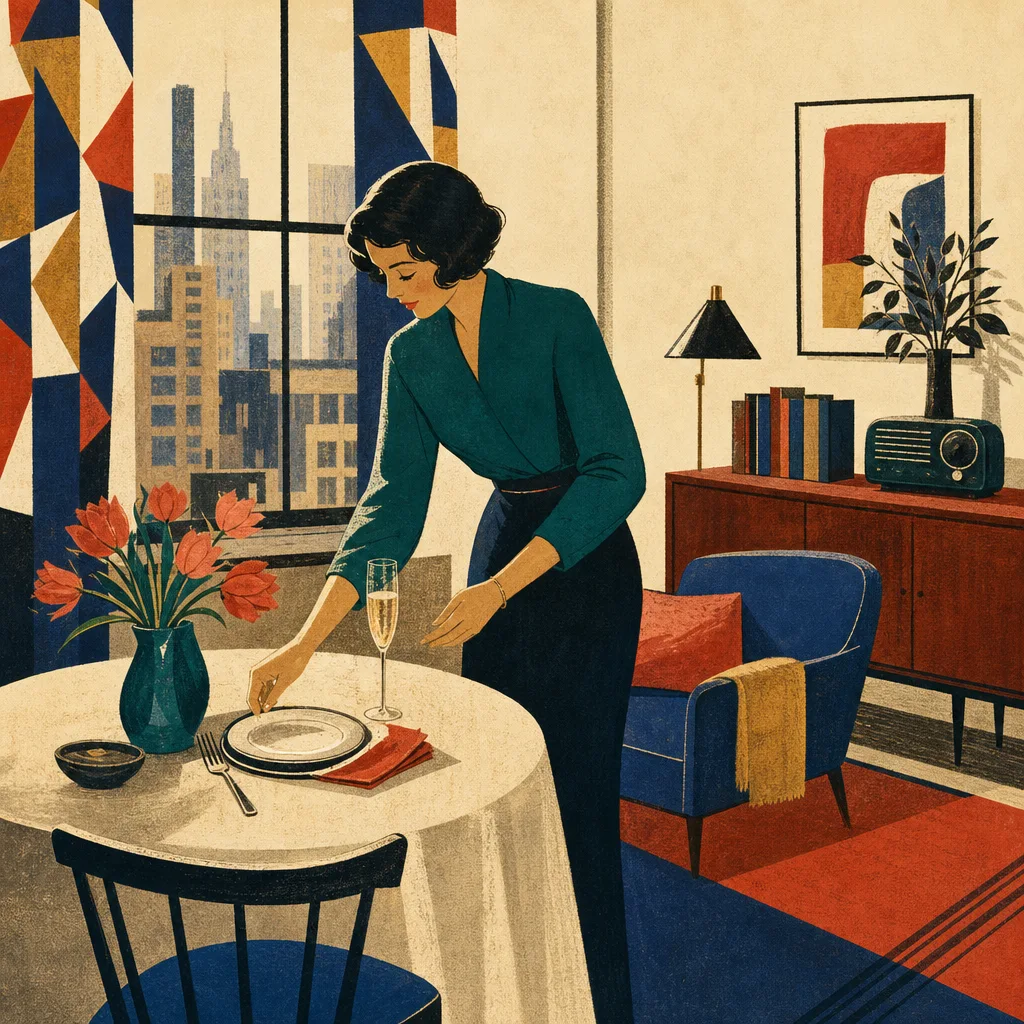
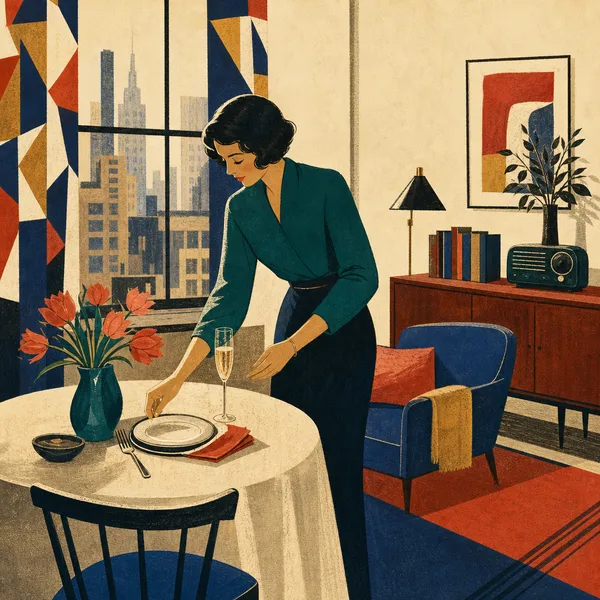
By the 1930s, the idea of the independent woman with her own home had become familiar enough for Marjorie Hillis to make an argument about how to enjoy it. Hillis, a Vogue editor, published Live Alone and Like It: A Guide for the Extra Woman in 1936. The subtitle tells you something about the assumptions she was working against. It also makes her cheerfulness about the subject all the more pointed. In her first chapter she spelled out the problem: the extra woman meant extra expense, an unmatched guest at the dinner table, and an object of other people’s sympathy.
Her message, in essence, was that a home occupied by one person deserved real attention. Have a proper evening. Choose the things you like. Make the room pleasant. Do not treat ordinary pleasure as something to postpone until somebody else arrives.
Hillis was writing from a specific, relatively comfortable social position; her advice was not a universal recipe for affordable independence. But she had a sharp eye for a cultural problem that hasn't entirely disappeared: why should the nice dishes wait for guests?
The one-person household was becoming a subject for aspirational publishing. It was also becoming a consumer.
Room 3 1911–1912
3. The bed that disappeared
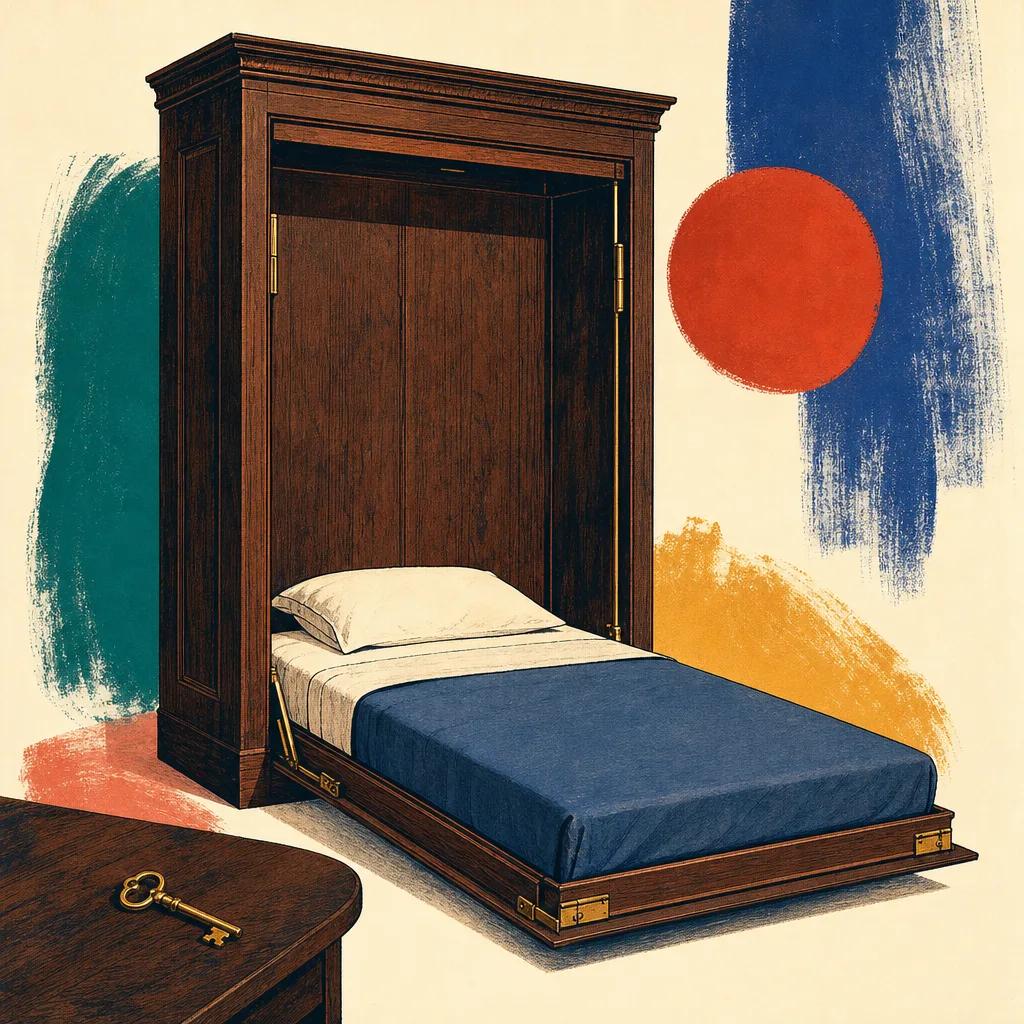
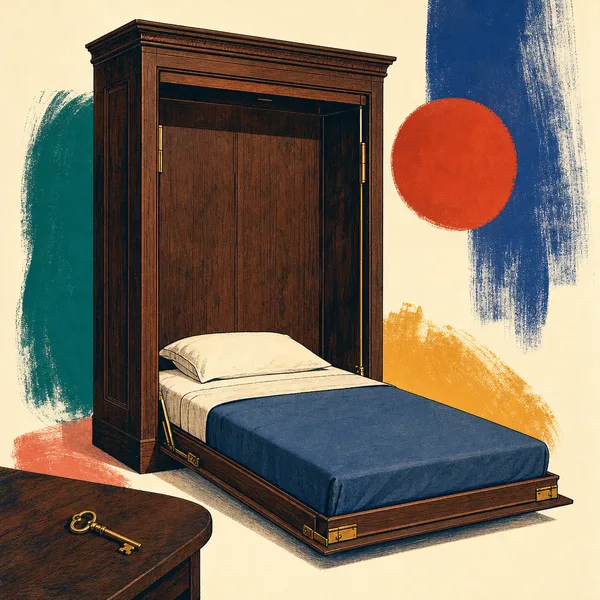
Meanwhile, there was an architectural problem. A single person might be able to rent one room, but the room still had to be a bedroom, living room, and sometimes dining room. That is a lot to ask of a rectangle with one window.
William L. Murphy was among the inventors who tackled the problem with a disappearing bed. His United States patent No. 1,030,201, filed April 3, 1911, and issued June 18, 1912, described a mechanism for moving a full-width bed through a narrower opening and concealing it when it was not in use.
The folding bed offered a remarkable proposition: the same square footage could perform different jobs at different hours. The floor plan could stop pretending that everyone needed a dedicated bedroom and a dedicated sitting room. A compact dwelling could be an intentional design rather than an incomplete house.
Of course, disappearing furniture still leaves you with the small matter of moving the furniture. It was an ingenious compromise, not the abolition of domestic labor.
Room study
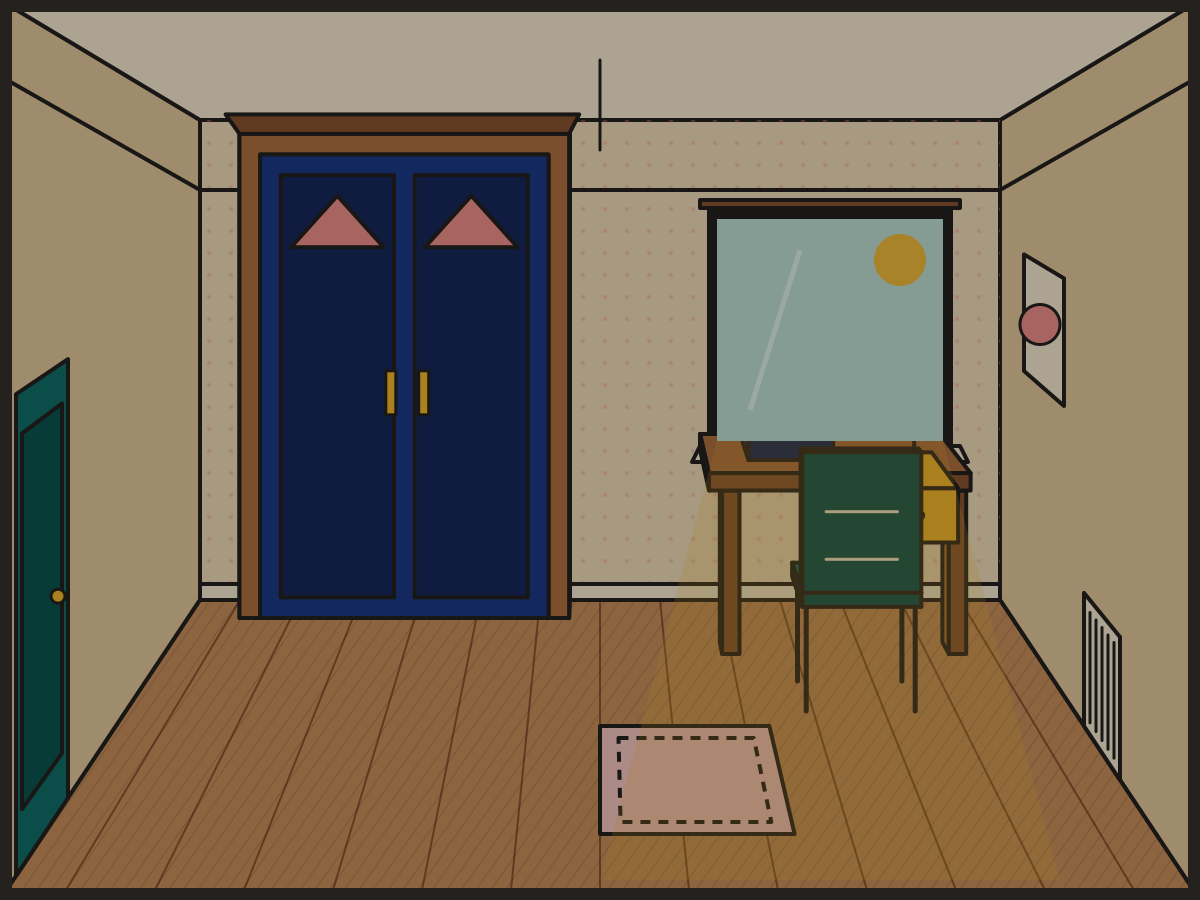
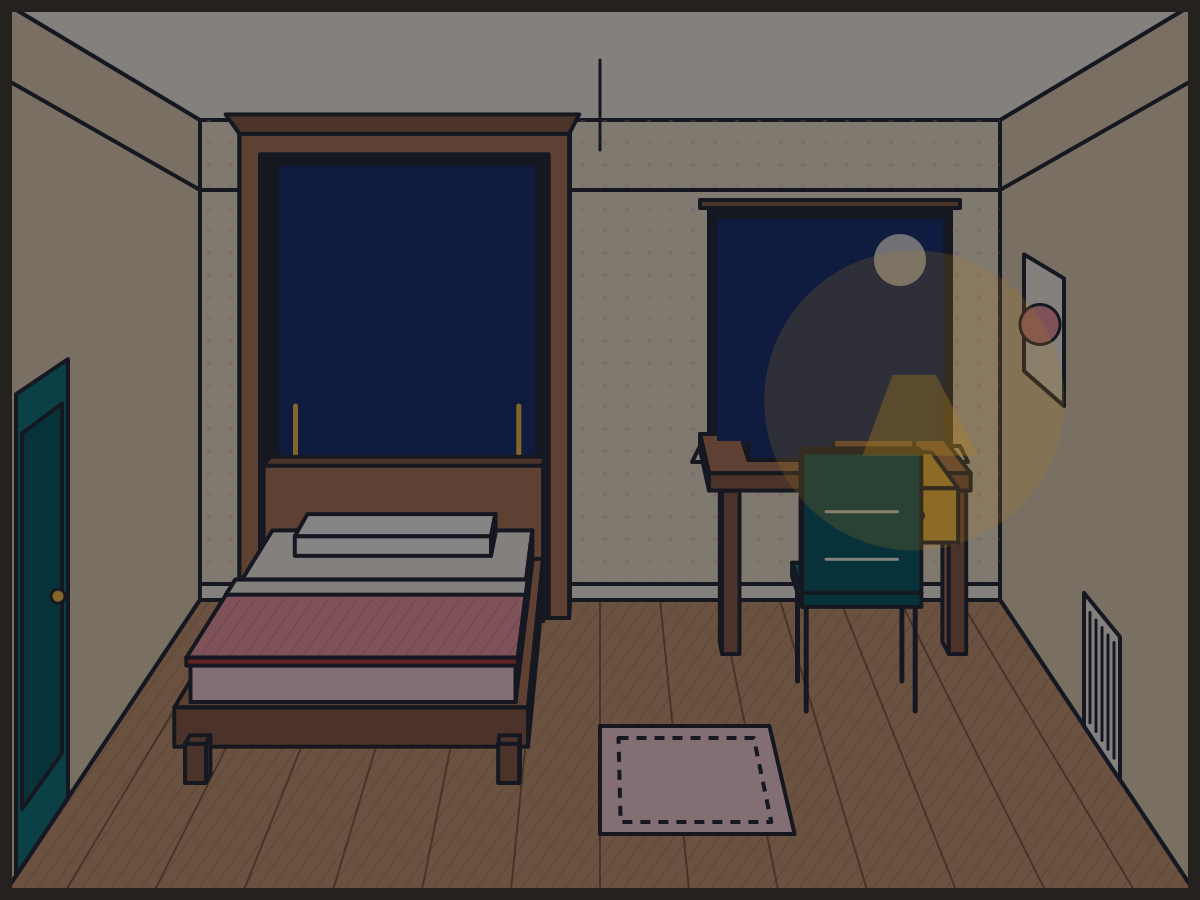
One room, by day and by night.
Room 4 20th century
4. The machinery of a one-person household
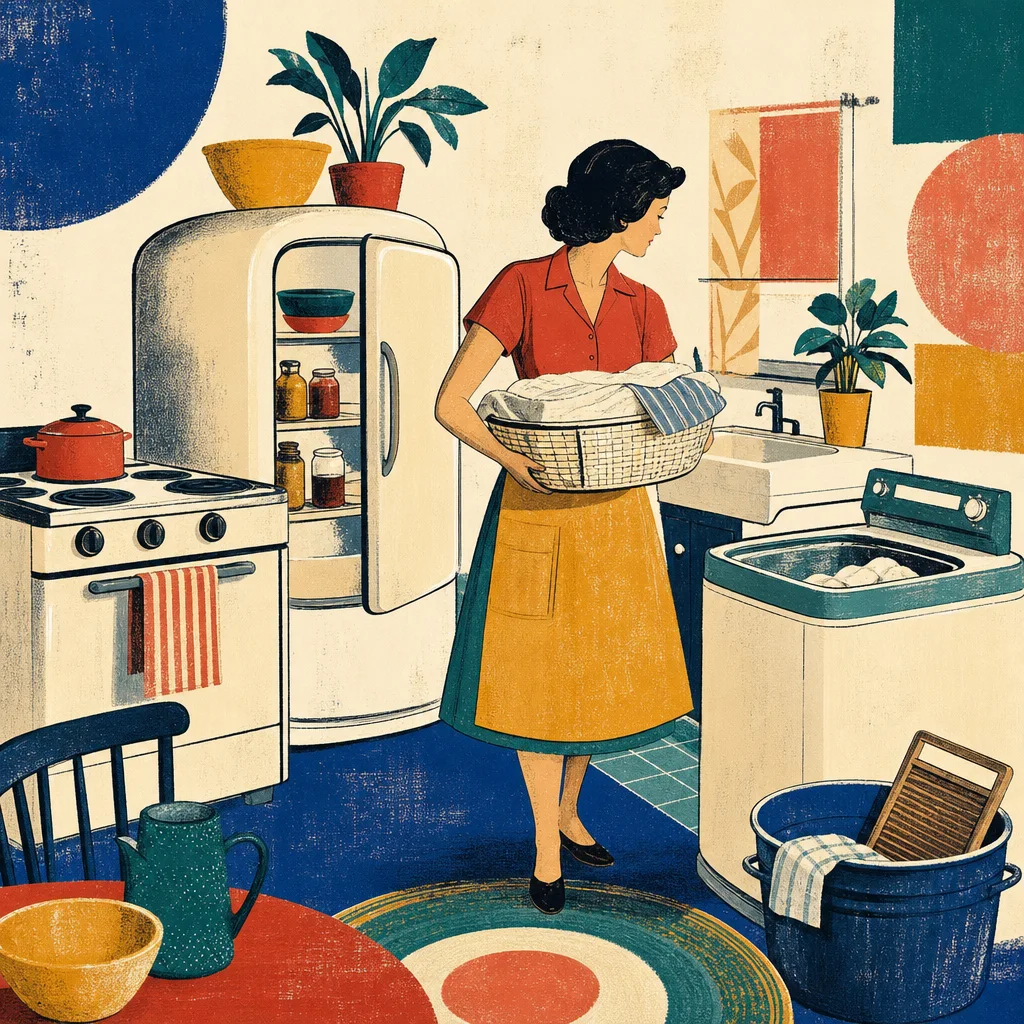
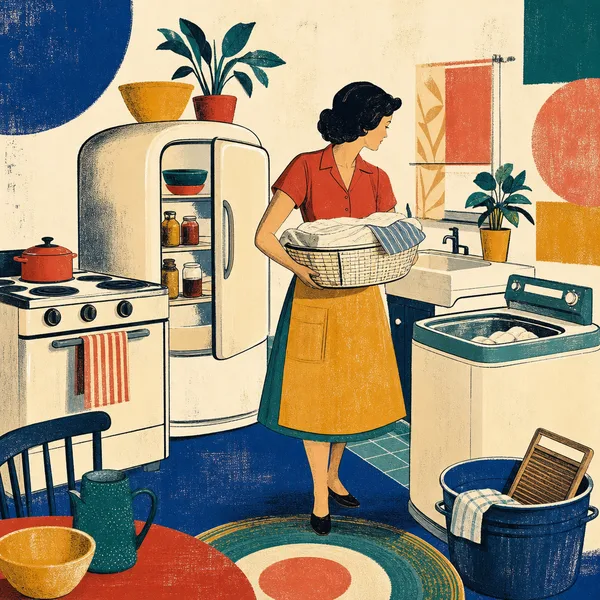
As twentieth-century homes acquired more reliable plumbing, electrical service, refrigeration, laundry equipment, and ready-made goods, some domestic tasks became easier to perform without a large household labor force. A smaller kitchen could function as a kitchen. One person could store food safely, wash clothes, and prepare a meal with less manual work than earlier generations had to supply.
This was not an unbroken march toward leisure. Historian Ruth Schwartz Cowan argued in More Work for Mother (1983) that new household technologies often reorganized work and expectations rather than simply eliminating it. When standards rose, some of the apparent time savings disappeared into more ambitious definitions of what a properly kept home should be.
Still, these changes altered the practical possibilities of a household maintained by one person. Independence needed electricity, appliances, and access to services as much as it needed independence of mind.
Room 5 1974
5. The right to stay—and the means to pay
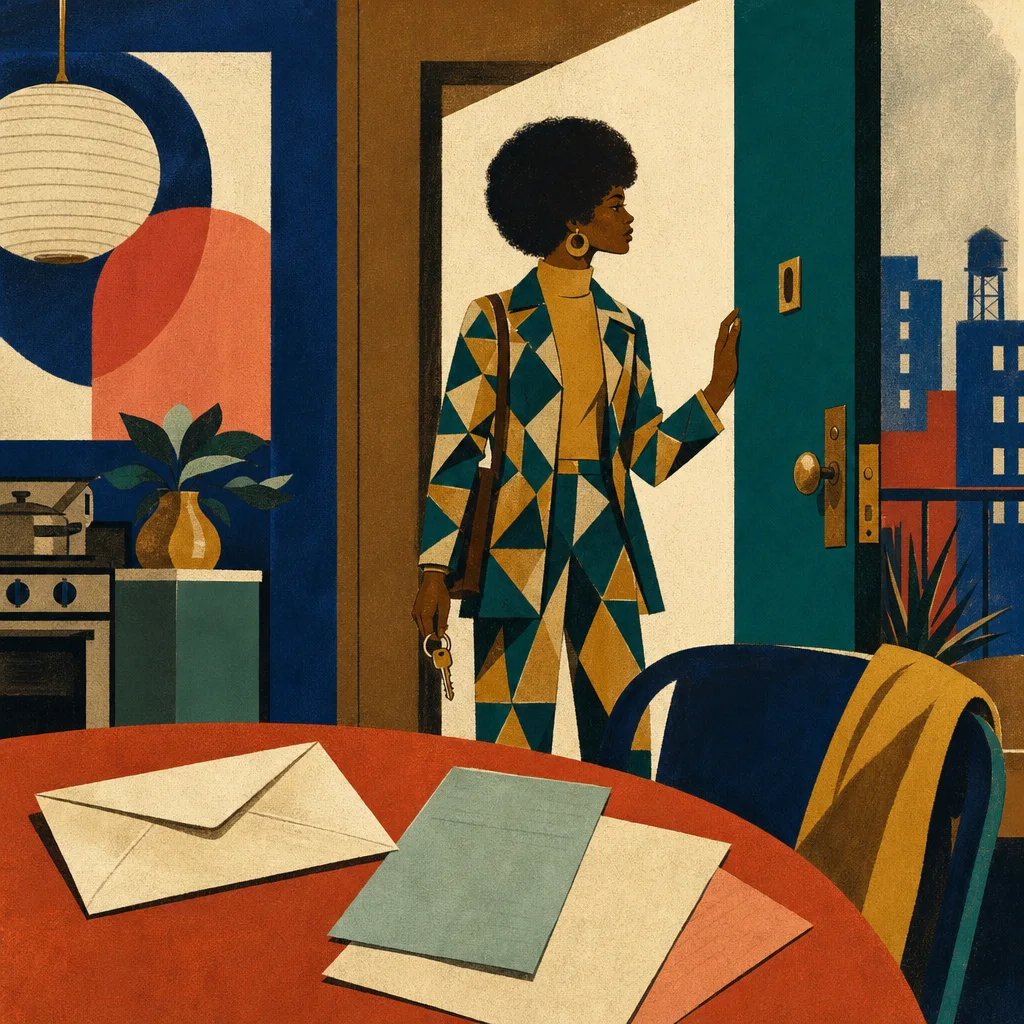
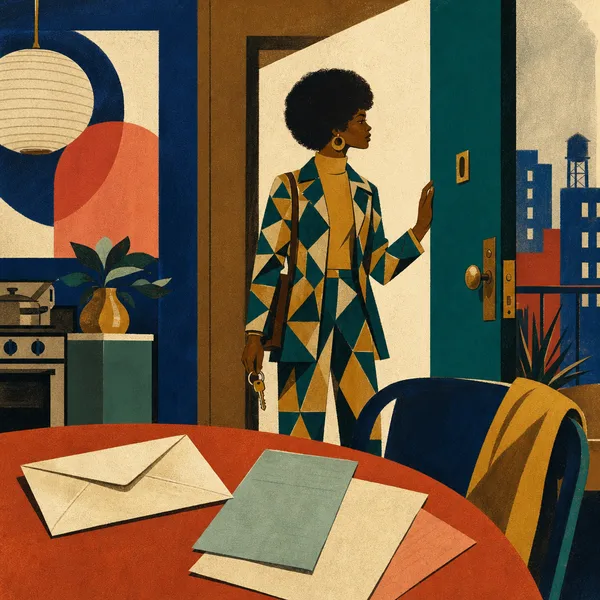
A household can only remain independent if its resident can afford to keep it. Across the twentieth century, pensions, Social Security, paid employment, changing marriage patterns, and legal reforms affected who could support a home alone.
These developments mattered differently for different people. Older adults with a stable income could sometimes remain in their homes after a partner died. Women with wages, assets, or access to credit could make housing choices that were harder under earlier legal and economic arrangements. Other people remained excluded by low pay, discrimination, insecure employment, or expensive housing. The Equal Credit Opportunity Act of 1974, for example, prohibited creditors from discriminating against applicants on the basis of sex or marital status—a consequential reform for women seeking to establish and finance households independently.
Living alone grew more common, but the ability to do so was never equally distributed. A door with your own key is delightful. The rent is less whimsical.
Room 6 1975 / 2025
6. From exception to ordinary household
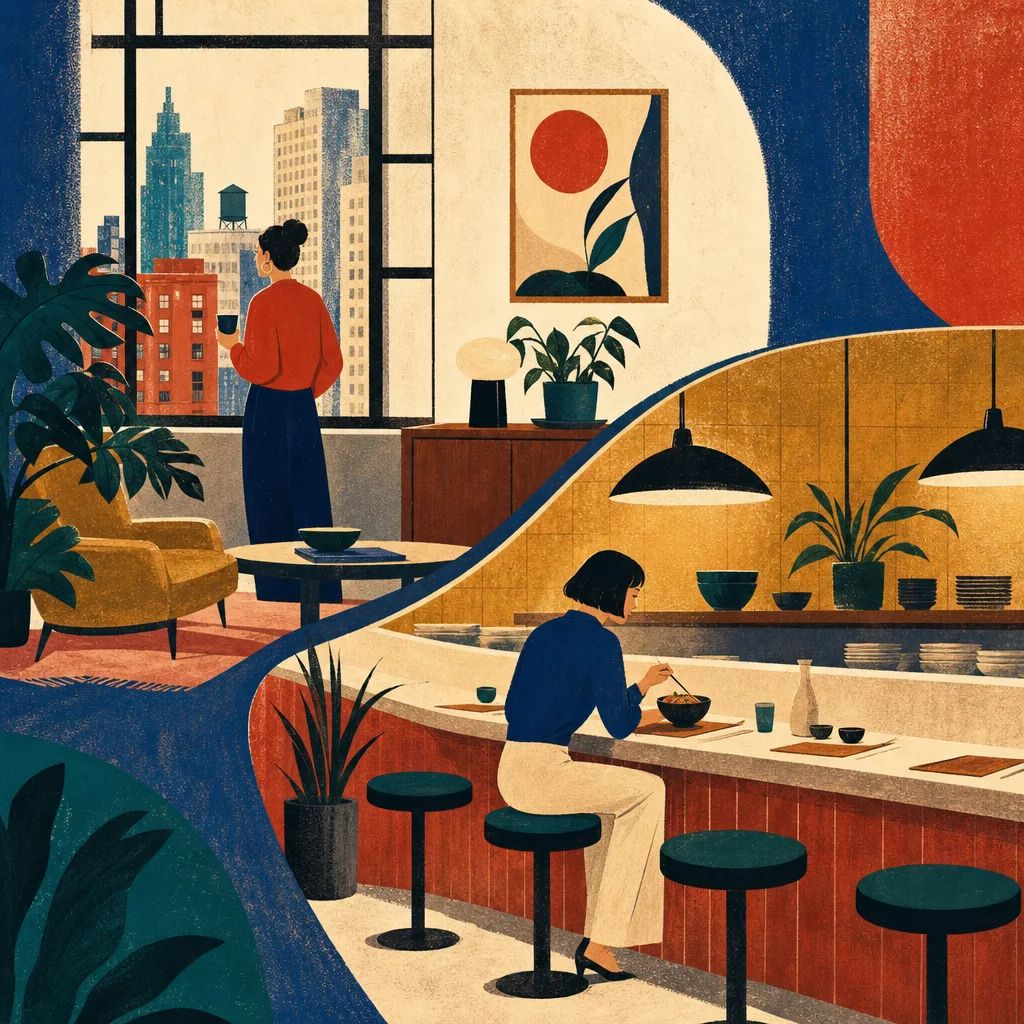
The scale of the change is striking. According to the U.S. Census Bureau, one-person households represented 20 percent of American households in 1975 and 29 percent in 2025—39.7 million households in that later year. This is a transformation in the ordinary architecture of domestic life, not merely a trend among urban professionals.
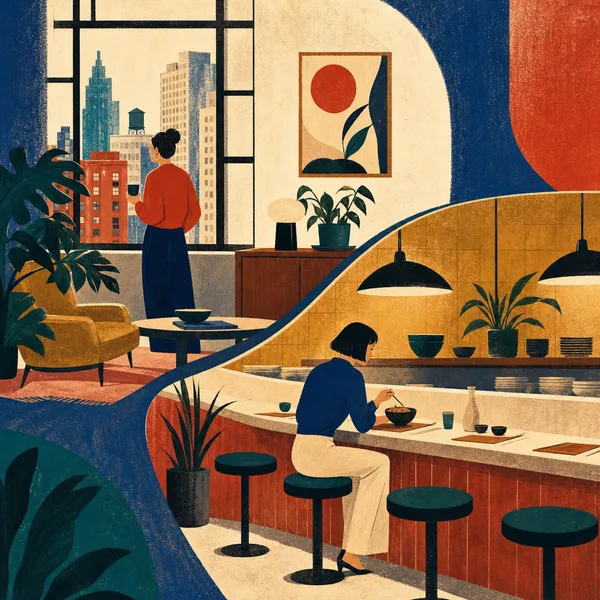
Other societies developed visible consumer practices around one-person activities. In Japan, the term ohitorisama came to describe the person enjoying services or leisure on their own, especially in discussions of women dining, staying in hotels, or traveling alone. Solo dining became something businesses could actively accommodate rather than merely tolerate.
A restaurant table, a hotel room, or a package of groceries might still be designed for two or four. But an increasingly large group of customers was asking a reasonable question: what if there is only one of us?
Room 7 The present
7. The one-person premium
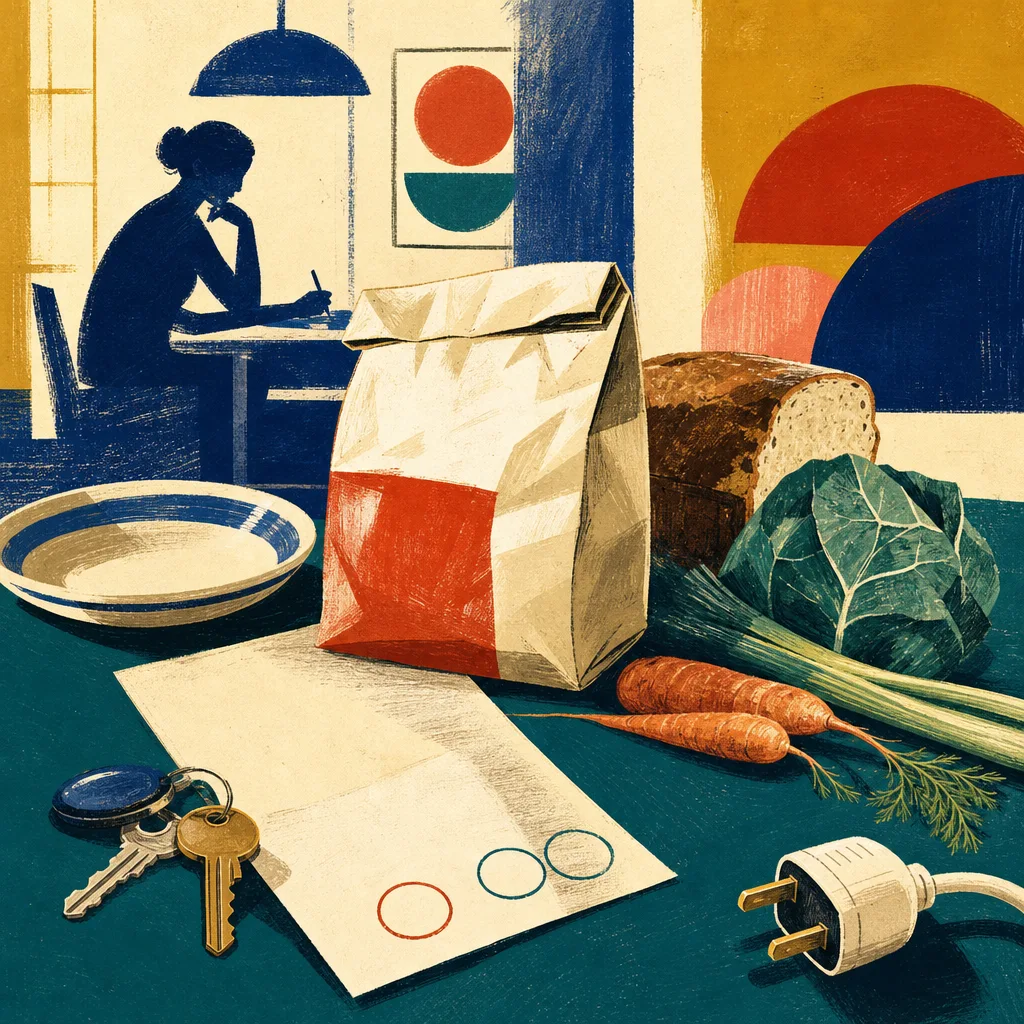
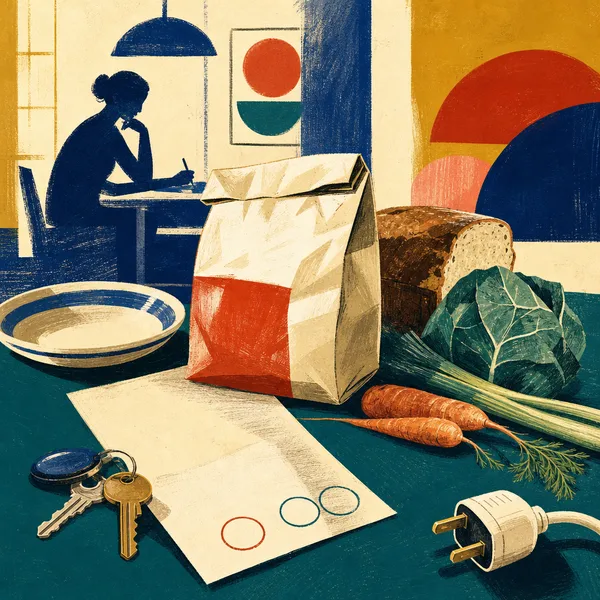
Independence can be expensive precisely because it is independent. A couple may share rent, internet service, household equipment, and food without doubling every cost. A single resident pays the full utility connection fee, buys the whole replacement appliance, and has nobody automatically available to keep an eye on a delivery or help move a wardrobe.
The familiar bargain package can be poor value for the person who cannot use its contents before they spoil. A holiday meal designed for a family presents a similar puzzle. The price per serving may be impressive, but only if you actually want all the servings.
The infrastructure of solo living has advanced considerably. The economics of packaging, housing, and household work have not always caught up.
Room 8 A place of your own
8. A place of your own, and a system to run it
The history of living alone is not a tale of universal liberation, and it is not a diagnosis of loneliness. Living alone, being single, and feeling lonely are three different things. They can overlap. They are not interchangeable.
What changed was the possibility of maintaining an ordinary household without automatically needing another adult in it: a possibility made through wages, laws, housing, services, and a great deal of unglamorous technology. A one-person home now has many of the advantages of a shared one, along with some very particular logistical problems.
The point of learning this history is not to feel grateful to the inventor of the refrigerator every time you open it. It is to recognize that independence has always been partly a design problem. It becomes easier when the tools, systems, and habits actually suit the household using them.
The place is yours. Historically speaking, that is quite a lot.
Further reading and sources
Adapted from How We Got the Place to Ourselves: A Pop History of Living Alone, the Doing It Solo book in progress.
U.S. Census Bureau, Census Bureau Releases New Estimates on America's Families and Living Arrangements (https://www.census.gov/newsroom/press-releases/2025/families-and-living-arrangements.html) (December 2025).
YWCA of the City of New York, History (https://ywcanyc.org/about-the-yw/history/).
Marjorie Hillis, Live Alone and Like It: A Guide for the Extra Woman (https://books.google.com/books/about/Live_Alone_and_Like_it.html?id=4XZDAAAAIAAJ) (Bobbs-Merrill, 1936).
Joanna Scutts, The Extra Woman: How Marjorie Hillis Led a Generation of Women to Live Alone and Like It (Liveright, 2017).
William L. Murphy, U.S. Patent No. 1,030,201, Disappearing Bed (https://patents.google.com/patent/US1030201) (1912).
Ruth Schwartz Cowan, More Work for Mother (https://wellcomecollection.org/works/mf22vrxe) (Basic Books, 1983).
Kaori Shoji, Japanese women and the art of being alone (https://www.japantimes.co.jp/life/2011/03/09/language/japanese-women-and-the-art-of-being-alone/) (The Japan Times, 2011).
Spotted an error, or know a story we should add? Write to us at doingitsolo@pettyfeatherpublishing.com.